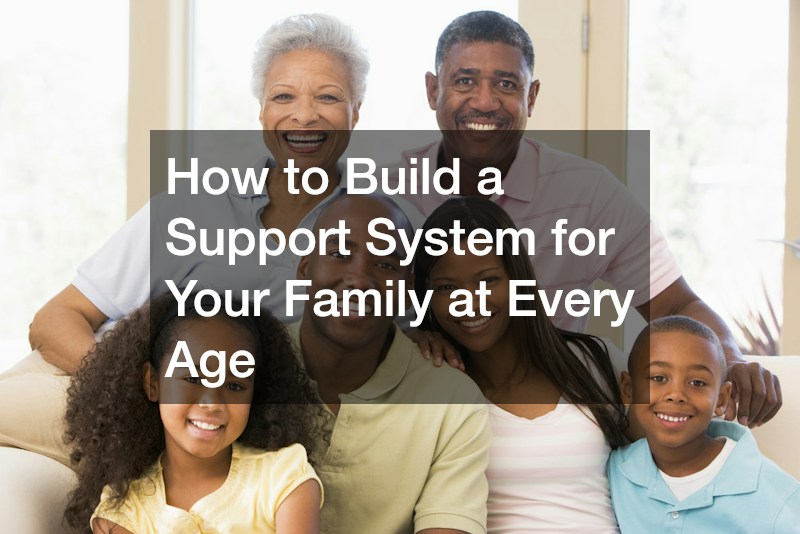

Families go through countless changes over the years. Children grow into teenagers, teenagers become adults, parents take on new responsibilities, and older relatives may eventually need additional care and attention. While every family looks different, having a reliable support system can make these transitions easier to manage.
A strong family support system is about more than having people to call during an emergency. It can include relatives, friends, teachers, healthcare providers, neighbours, community organisations, professional services, and other trusted resources. Building these connections early can help your family feel more prepared when everyday challenges or major life changes arise.

Start With Your Family’s Needs
The first step in building a strong support system is understanding what your family actually needs. Those needs will change depending on your children’s ages, your household responsibilities, your work schedules, and the circumstances affecting individual family members.
For families with young children, support may revolve around childcare, education, transportation, healthcare, and activities. Parents of teenagers may need resources related to academics, social development, employment preparation, and emotional support. Adults caring for ageing parents may have an entirely different set of responsibilities.
Take some time to identify the areas where your family could use additional assistance. You may need practical help, such as someone who can pick up a child from school, or professional support, such as a healthcare provider who can assist when someone becomes sick.
It can also help to consider your family’s financial situation. A support system does not have to consist entirely of paid services. Friends and relatives can provide valuable assistance, while community programs and local organisations may offer affordable or free resources.
Build Connections During Early Childhood
The early years of a child’s life can be incredibly busy for parents. Establishing a dependable network during this period can provide both practical assistance and opportunities for children to develop relationships outside the immediate household.
Childcare providers, teachers, relatives, neighbours, and other parents can all become valuable members of your family’s support network. Parents may discover that other families at their child’s school are experiencing many of the same challenges, creating opportunities to exchange advice and help one another.
Education is another important part of this network. When parents begin researching a private preschool, for example, they can look beyond academics and consider whether the school encourages communication between educators and families.
Parents can also look for activities that encourage children to interact with peers. Playgroups, sports, library programs, community activities, and age-appropriate classes can help children establish friendships while giving parents opportunities to meet other caregivers.
Fundraising and school-community activities can also provide ways for parents to become involved. Some families may encounter product fundraising programs for schools, which can give parents another opportunity to participate in their children’s educational community.

Stay Involved During the Elementary Years
As children enter elementary school, their world expands considerably. They spend more time with teachers and classmates and begin developing greater independence.
Parents can strengthen their support network by maintaining communication with teachers and school administrators. Staying informed about a child’s academic and social experiences makes it easier to recognise challenges before they become overwhelming.
When evaluating educational options, families may compare public and private schools based on their children’s individual needs. Some parents may investigate local private elementary schools when looking for a particular educational environment or additional resources.
Education is not simply about choosing a school, however. Parents should also help children build relationships and learn how to seek assistance when they encounter problems. Encouraging children to identify trusted adults gives them additional sources of support as they become more independent.
Some families may also consider specialised educational approaches. For example, parents researching Montessori elementary schools may focus on programs that encourage independence, responsibility, and hands-on learning.
At home, parents can reinforce these skills by giving children age-appropriate responsibilities. Simple routines, household tasks, and opportunities to make decisions can help children develop confidence while teaching them that asking for help is a normal part of life.
Create a Strong Network During the Teen Years
The teenage years often bring a new set of challenges. Adolescents are developing their identities, navigating changing friendships, preparing for adulthood, and making decisions that can affect their future.
Parents should continue providing guidance while gradually allowing teenagers to take more responsibility for their choices. This balance can be challenging, but a broad support system can help.
Teachers, coaches, counsellors, relatives, mentors, and family friends can provide teenagers with additional perspectives. Sometimes, teenagers may be more comfortable discussing certain concerns with a trusted adult outside their immediate family.
Parents should also begin talking about long-term goals. Discussions about college, careers, finances, relationships, and independent living can help teenagers understand what they may encounter after graduation.
For families considering private education, researching the best private high schools can be part of planning for a teenager’s academic future. The right educational environment will depend on the student’s goals, learning preferences, interests, and individual circumstances.
Healthcare should remain part of the support system as well. Families should know where they can turn when a teenager needs medical attention outside regular appointments. Knowing where the nearest urgent care center is located can be especially useful when unexpected illnesses or minor injuries occur.

Prepare for Young Adulthood
A family support system should not disappear when children turn 18. Young adults may technically become independent, but many still need guidance as they navigate education, employment, housing, finances, and relationships.
Parents can support young adults without attempting to control every decision. Instead, the focus can shift toward being available when advice or assistance is needed.
Financial conversations are particularly valuable during this stage. Young adults can benefit from learning how to create budgets, manage recurring expenses, understand credit, save money, and prepare for unexpected costs.
Families can also discuss practical life skills. Knowing how to schedule appointments, communicate with service providers, maintain a home, and respond to emergencies can help young adults become more self-sufficient.
Parents can encourage their adult children to build support systems of their own. Friends, coworkers, mentors, professional organisations, community groups, and trusted neighbours can all become valuable connections.
Strengthen Your Home’s Support Network
A family’s physical home is another important part of its support system. Maintaining a safe and functional home can reduce stress and prevent minor problems from becoming larger issues.
Home maintenance should be approached proactively rather than waiting until something breaks. Families can keep a list of trusted professionals who can help with major household needs.
For example, establishing a relationship with a reliable roofing company can make it easier to address leaks, storm damage, or other roofing concerns when they arise.
Electrical problems should also be handled by qualified professionals. Having information for a provider offering electrical services can be useful when a household experiences an unexpected electrical issue.
The same principle applies to plumbing. Keeping contact information for a dependable plumbing company means you already know where to turn if a pipe bursts, a water heater develops a problem, or another plumbing emergency occurs.
Having these contacts available is particularly helpful for busy families. Instead of scrambling to find a professional during an emergency, household members can rely on an established list of trusted resources.

Account for Pets and Other Family Members
Pets are often considered members of the family, and their needs can change throughout their lives. Young animals may require extensive training and supervision, while older pets may need additional veterinary care or accommodations.
Families can include veterinary clinics, pet sitters, groomers, trainers, and trusted friends in their broader support network. Having several people who understand your pet’s routines can also be helpful when your family travels or faces an unexpected situation.
Eventually, families may have to navigate difficult decisions related to an ageing or seriously ill pet. Planning ahead can make emotionally difficult circumstances somewhat easier to manage.
Understanding potential pet cremation costs is one example of information families may want to research before they actually need it. Advance planning can help family members understand their options and avoid having to make every decision under pressure.
Support Aging Parents and Relatives
As parents and other relatives grow older, family responsibilities can change again. Adult children may find themselves balancing careers, parenting, and caregiving responsibilities.
This is often the stage when a family support system becomes particularly important. One person should not necessarily be responsible for every aspect of an older relative’s care.
Family members can divide responsibilities based on their abilities and availability. One person might help with transportation, another might handle grocery shopping, and another might assist with appointments or household tasks.
Professional services may also be appropriate depending on the individual’s circumstances. Healthcare professionals, home-care providers, senior organisations, financial professionals, and community programs can all provide valuable assistance.
Open communication is essential. Families should discuss an older relative’s preferences, financial considerations, living arrangements, healthcare needs, and emergency plans before a crisis occurs whenever possible.
Create an Emergency Contact Plan
Every family should have a basic emergency plan that everyone understands. This becomes particularly important as children become more independent or older relatives begin requiring additional assistance.
Start by creating a list of important contacts. This might include family members, neighbours, healthcare providers, schools, employers, childcare providers, and emergency services.
Make sure family members know where important information is stored. Younger children may simply need to know which trusted adults they can contact, while teenagers and adults can learn more detailed emergency procedures.
Families should also discuss what to do if normal communication methods are unavailable. Establishing a designated meeting location or backup communication method can make emergencies less chaotic.
Review the plan periodically. Phone numbers, addresses, workplaces, schools, and other details can change over time.
Make Community Connections
A family does not have to solve every problem alone. Community connections can provide resources that may not be available within the immediate household.
Libraries, recreation centres, community organisations, schools, religious organisations, neighbourhood groups, nonprofit organisations, and local events can all help families build relationships.
Parents can encourage children to become involved in age-appropriate community activities. These experiences help children meet people outside their immediate social circles and can teach them cooperation, responsibility, and empathy.
Adults can also benefit from community connections. Joining professional groups, volunteering, participating in neighbourhood events, or developing friendships with other parents can expand a family’s network.
The goal is not to have hundreds of contacts. A smaller network of reliable, trustworthy people can be much more valuable than a large collection of casual acquaintances.
Teach Every Family Member to Ask for Help
One of the most important parts of a family support system is teaching everyone that asking for help is a strength rather than a failure.
Young children can learn to identify trusted adults. Teenagers can learn how to communicate when they are struggling. Young adults can learn when they need professional assistance. Parents can recognise when they are overwhelmed rather than attempting to manage everything themselves.
This creates a family culture where support is normal.
It is also important to return the favour. A strong support system works in both directions. When family members help one another, they build trust that can make it easier for everyone to reach out when they eventually need assistance.
Review Your Support System Regularly
Your family’s support system should evolve as your family changes. A network that worked well when your children were toddlers may not be appropriate once they become teenagers.
Set aside time once or twice a year to review your family’s needs. Consider whether contact information is current, whether your emergency plan still works, and whether there are new challenges that require additional resources.
You may also want to evaluate your family’s educational, healthcare, financial, transportation, home maintenance, and caregiving resources.
The goal is not to predict every possible problem. Instead, it is to create enough structure and connection that your family knows where to turn when something unexpected happens.
Building a support system for your family is an ongoing process rather than a one-time task. As children grow, parents age, careers change, and new responsibilities appear, the people and resources your family relies on will naturally evolve.
A strong network combines personal relationships with professional and community resources. By encouraging communication, preparing for emergencies, maintaining trusted connections, and teaching every family member to ask for help, you can create a foundation that supports your household through every stage of life.